
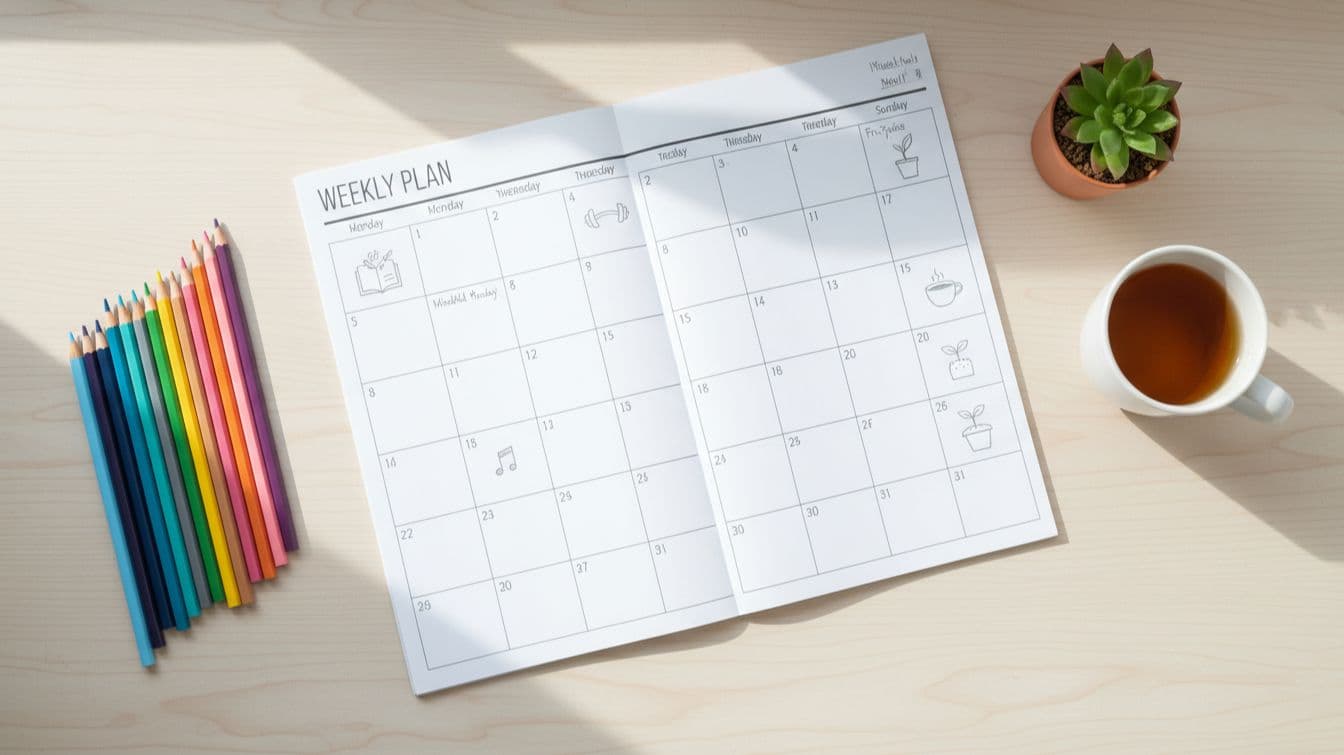
How to Build a Daily Activity Routine for Your Elderly Parent
"What should we do today?"
If you're a caregiver, you've asked yourself this question hundreds of times. And every day, figuring out the answer from scratch is exhausting.
The solution? A routine.
A daily activity routine takes the guesswork out of engagement. It provides structure for your loved one (which reduces anxiety) and simplifies your life as a caregiver. Instead of reinventing the wheel every day, you follow a proven pattern.
This guide shows you how to build a sustainable activity routine that works for your elderly parent—and for you.
Why Routines Matter for Seniors
Reduces Anxiety
Predictability is calming. When seniors know what comes next, they feel more secure. This is especially important for those with dementia, where confusion is already high.
Provides Purpose
Having scheduled activities gives structure to the day. There's a reason to get up, get dressed, and engage.
Improves Sleep
Consistent daytime routines help regulate sleep-wake cycles, leading to better nighttime rest.
Simplifies Caregiving
When you have a routine, you're not making decisions from scratch every day. That's less mental load for you.
Creates Positive Anticipation
"After lunch, we do our puzzle" becomes something to look forward to.
Principles for Building a Routine
1. Work with Their Natural Rhythms
Most seniors have predictable energy patterns:
Morning: Often the highest cognitive function and energy Midday: Good for social activities and moderate engagement Afternoon: Energy typically dips; lighter activities work better Evening: Wind-down time; calming activities only
Tip: Schedule the most challenging activities during peak hours. Save simple, calming activities for low-energy periods.
2. Balance Activity Types
A good routine includes variety:
- Cognitive activities: Puzzles, word games, trivia
- Creative activities: Coloring, crafts
- Physical activities: Movement, exercise, walks
- Social activities: Conversation, games with others
- Calming activities: Music, gentle coloring, looking at photos
Don't do the same thing every day—rotate through different types.
CarePrints offers: 18 different activity types so you can easily rotate through variety while maintaining routine structure.
3. Keep Sessions Short
Long activities lead to fatigue and frustration. Better to have multiple short sessions than one exhausting marathon.
Recommended session lengths:
- High cognitive function: 20-30 minutes
- Moderate impairment: 15-20 minutes
- Advanced dementia: 10-15 minutes
4. Build in Flexibility
Routines provide structure, not rigidity. Some days they won't want to do the planned activity. That's okay—have backup options ready.
5. Include Rest Periods
Engagement is good; exhaustion is not. Build breaks into the schedule.
6. Make Activities Accessible
Activities should be ready to go with minimal setup. If you have to search for materials every time, the routine will fail.
CarePrints approach: Our organized library lets you find and print activities quickly. Print a week's worth at a time so materials are always ready.
Building Your Routine: Step by Step
Step 1: Assess Their Current Day
Before creating a routine, observe their current patterns:
- When do they wake up and have peak energy?
- When do they typically nap or rest?
- What times are meals?
- When does sundowning occur (if applicable)?
- What activities have worked in the past?
Step 2: Identify Activity Windows
Based on their patterns, identify windows for engagement:
Example:
- 9:00-9:30 AM: Morning activity window (high energy)
- 11:00-11:30 AM: Mid-morning activity window
- 2:00-2:30 PM: Afternoon activity window (lower energy)
- 4:00-4:30 PM: Late afternoon calming activity (pre-sundowning)
Step 3: Assign Activity Types to Windows
Match activity intensity to energy levels:
| Time Window | Energy Level | Best Activity Types |
| Morning | High | Crosswords, trivia, complex coloring |
| Mid-morning | Good | Word searches, crafts, games |
| Early afternoon | Moderate | Simple coloring, sorting, music |
| Late afternoon | Low | Calming coloring, photo albums, gentle music |
Step 4: Create Weekly Rotation
Variety prevents boredom. Rotate activities throughout the week:
Sample Weekly Rotation:
| Day | Morning | Mid-Morning | Afternoon | Evening |
| Mon | Crossword | Coloring | Music | Photos |
| Tue | Word Search | Trivia | Sorting | Reading |
| Wed | Crossword | Craft | Coloring | Music |
| Thu | Word Search | Bingo | Reminisce | Photos |
| Fri | Crossword | Coloring | Music | Reading |
| Sat | Trivia | Craft | Coloring | Music |
| Sun | Word Search | Photos | Gentle activity | Relaxation |
CarePrints offers: Enough variety to maintain this rotation indefinitely—hundreds of crosswords, word searches, coloring pages, and more.
Step 5: Prepare Materials in Advance
The routine fails if you're scrambling for materials. Set yourself up for success:
- Print a week's worth of activities at once
- Organize by day or activity type
- Keep supplies stocked (pencils, markers, etc.)
- Have backup activities ready
CarePrints tip: Use our subscription to download and print activities in batches. Our organized library makes it easy to find what you need for each day.
Step 6: Communicate the Routine
Help them know what to expect:
- Post a simple visual schedule
- Use consistent language ("It's puzzle time!")
- Give transition warnings ("In five minutes, we'll do our coloring")
Step 7: Evaluate and Adjust
After a week or two, assess what's working:
- Which activities engage them most?
- Which times work best?
- What causes frustration?
- What should you do more of? Less of?
Adjust the routine based on what you learn.
Sample Daily Routines
Routine A: Family Caregiver (Part-Time Care)
For caregivers who provide care part of the day
| Time | Activity | CarePrints Resource |
| 9:00 AM | Morning crossword together | Crosswords |
| 10:30 AM | Independent coloring while you work nearby | Coloring Pages |
| 2:00 PM | Word search together | Word Searches |
| 4:00 PM | Looking at photos + reminiscence prompts | Premium Activities |
Routine B: Full-Time Home Care
For caregivers providing all-day care
| Time | ActivityCare | Prints Resource |
| 8:30 AM | Breakfast + morning conversation | — |
| 9:30 AM | Cognitive activity (crossword/trivia) | Crosswords, Trivia |
| 10:30 AM | Break / rest | — |
| 11:00 AM | Creative activity (coloring/craft) | Coloring, 3D Crafts |
| 12:00 PM | Lunch | — |
| 1:00 PM | Rest / nap | — |
| 2:30 PM | Light activity (word search/sorting) | Word Searches, Sorting |
| 3:30 PM | Music or movement | — |
| 4:30 PM | Calming activity (simple coloring) | Coloring Pages |
| 5:30 PM | Dinner | — |
| 7:00 PM | Evening wind-down (photos/reading) | E-Tales, Photos |
Routine C: Dementia Care (Flexible Structure)
For seniors with dementia who need shorter, simpler sessions
| Time | Activity | Notes |
| After breakfast | Simple activity (10-15 min) | Whatever they're willing to do |
| Mid-morning | Try another short activity | Follow their lead |
| After lunch | Rest, then gentle engagement | Very simple options |
| Pre-dinner | Calming activity | Prevent sundowning |
| Evening | Quiet togetherness | Music, hand holding |
Key: Flexibility matters more than strict scheduling with dementia. The routine is a guide, not a rule.
Common Routine Challenges
"They Won't Do the Planned Activity"
Solution: Always have 2-3 backup options. If they refuse crosswords today, offer coloring instead. Don't force it.
"The Routine Gets Boring"
Solution: Rotate themes and specific activities within each category. Monday's crossword is different from Wednesday's crossword.
CarePrints advantage: With hundreds of options in each category, you'll never run out of fresh material.
"I Don't Have Time to Prepare"
Solution: Batch your preparation. Spend 30 minutes once a week printing and organizing materials for all seven days.
"Their Abilities Have Changed"
Solution: Reassess and adjust. If crosswords have become too hard, switch to word searches. If coloring is too complex, choose simpler pages.
CarePrints offers: Multiple difficulty levels in every activity type, making it easy to adjust as abilities change.
"Weekends Are Different"
Solution: Have a separate weekend routine that's more relaxed but still provides structure.
Making It Stick
Start Simple
Don't try to implement a complex routine immediately. Start with one consistent daily activity and build from there.
Be Consistent
The routine only works if you follow it. Consistency creates the expectation that makes routines beneficial.
Celebrate Success
Notice when the routine works. "We've done our morning puzzle every day this week!" Small wins matter.
Forgive Bad Days
Some days the routine won't happen. That's okay. Start fresh tomorrow.
Your Routine Resource
CarePrints makes maintaining an activity routine easy. Our organized library of thousands of activities means you'll always have what you need.
Perfect for routines:
- 18 activity types for variety
- Multiple difficulty levels for any cognitive stage
- Hundreds of options in each category
- Organized library for quick access
- Print in batches for the week ahead
What we offer:
- 1,700+ coloring pages
- Hundreds of crosswords and word searches
- Bingo sets ($17.99)
- 3D Creative Crafts ($4.99)
- Trivia and brain games (Premium)
- Reminiscence prompts (Premium)
- E-Tales stories for reading aloud
Questions? Contact us at 1.888.896.8275 or careprints@gcaresolution.com