
"Holiday Recipes Adapted for Seniors with Swallowing or Dietary Needs"
The holiday table is about more than food — it's about belonging. When everyone gathers around the same dishes, sharing the same meal, there's a sense of togetherness that goes beyond nutrition. But for seniors with swallowing difficulties (dysphagia), dietary restrictions, or texture needs, the traditional holiday spread can feel like a reminder of what they can no longer enjoy.
It doesn't have to be that way. With thoughtful adaptations, you can create holiday dishes that honor tradition while meeting your loved one's needs — so they can truly be part of the celebration.
Understanding the Need
Swallowing difficulties are common among older adults, particularly those who've had strokes, have Parkinson's disease, or are living with advanced dementia. Signs include coughing during meals, a "wet" voice after eating, food pocketing in the cheeks, or reluctance to eat.
Beyond dysphagia, many seniors manage diabetes, heart disease, kidney issues, or digestive problems that require modified diets. The holidays, with their rich, heavy dishes, can feel like a minefield.
The goal isn't to create an entirely separate meal, but to adapt the dishes everyone is eating so your loved one can participate.
Principles of Adaptation
When modifying recipes, think about texture (soft, pureed, or mechanical soft), moisture (adding gravies, sauces, or broths), portion size, and seasoning (flavor doesn't have to be sacrificed).
Always consult with your loved one's healthcare provider or speech therapist about their specific texture requirements. The guidelines below are general starting points.
Adapted Holiday Classics
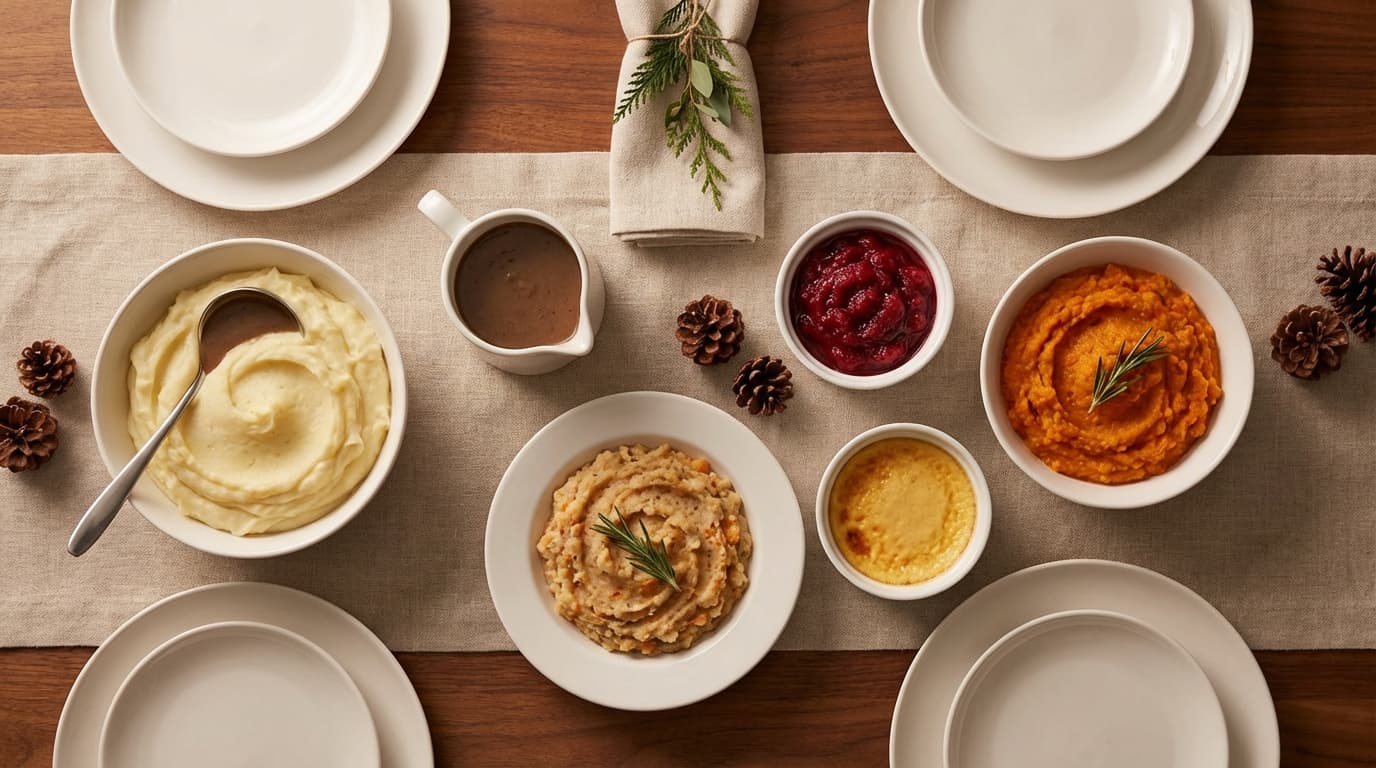
Mashed Potatoes: Already a soft-texture winner. Make them extra smooth by using a food mill or ricer instead of a masher. Add warm cream and butter for moisture. Avoid chunks of skin or lumps that could cause choking.
Gravy: Strain your gravy through a fine mesh sieve to remove any lumps or bits. A smooth gravy can make many other foods easier to swallow. Consider making extra — it's your secret weapon for moisture.
Turkey or Roasted Meat: For mechanical soft diets, serve finely minced turkey moistened with plenty of gravy. For pureed diets, blend turkey with broth and a little butter until smooth. Season well — pureed doesn't mean bland.
Stuffing/Dressing: Traditional stuffing with chunks of bread and celery can be challenging. For a soft version, make a bread pudding-style savory dish: blend the ingredients more finely, add extra egg and broth, and bake until soft throughout.
Vegetables: Steam or roast vegetables until very tender, then mash or puree. Butternut squash, sweet potatoes, and carrots puree beautifully with a little butter and warm milk. Green beans can be pureed into a smooth "green bean puree" seasoned with a touch of cream and garlic.
Cranberry Sauce: Smooth, jellied cranberry sauce is naturally dysphagia-friendly. If you make fresh cranberry relish, blend it smooth and strain out any remaining skins.
Desserts: Pumpkin pie filling (without the crust) is naturally soft and smooth. Serve it in a small dish topped with a dollop of whipped cream. Smooth custards, puddings, and mousse are also excellent options. Avoid nuts, seeds, and crusty pastry edges.
Presentation Matters
Just because food is pureed or modified doesn't mean it should look institutional. Use piping bags to create appealing shapes with pureed foods. Serve in small, elegant portions on nice dishes. Garnish plates with a sprig of rosemary or a drizzle of sauce. When food looks appetizing, it feels like part of the celebration rather than a medical accommodation.
Making Them Part of the Meal
Serve your loved one at the same time as everyone else, from serving dishes at the table if possible. Avoid making a big production of their "special" plate. The goal is inclusion, not spotlight.
If their meal looks noticeably different, a simple "I made the potatoes extra smooth this year — I think they came out great" normalizes the adaptation without drawing attention to medical needs.
A Seat at the Table
Food is love made visible. When you take the time to adapt holiday recipes for your loved one's needs, you're saying: "You belong here. We want you with us." That message matters far more than any single dish.
Call to Action: Mealtime challenges are just one part of caring for an aging loved one. Geriatric Care Solutions can help you navigate nutrition, daily care, and more. Call 1-888-896-8275 or email ask@gcaresolution.com.