
"Making Memories: Holiday Activities for Every Ability Level"
The holidays are built on activities — baking cookies, decorating trees, wrapping gifts, singing carols. But what happens when your loved one can no longer participate the way they once did? When arthritis makes cookie decorating painful, when dementia makes following recipes impossible, when fatigue limits how long they can engage?
The answer isn't to exclude them from holiday activities. It's to adapt the activities so connection remains possible. Meaningful participation looks different at different ability levels — and that's okay. What matters is being together.
The Goal Is Connection, Not Perfection
Before planning activities, shift your mindset. The goal isn't a Pinterest-worthy result. It's not about producing perfect cookies or flawless decorations. The goal is shared time, sensory engagement, and moments of joy.
When you release the pressure of outcome, you create space for presence. Your mother doesn't need to frost twenty cookies perfectly. She needs to feel included, useful, and connected. One cookie, frosted slowly with your help, accomplishes that beautifully.
Sensory Activities for All Abilities
Some of the most meaningful holiday activities engage the senses rather than requiring complex skills.
Scent can transport people instantly. Bring in pine branches, cinnamon sticks, or orange slices studded with cloves. Even someone with advanced dementia often responds to familiar holiday scents with visible pleasure or recognition.
Music crosses cognitive barriers. Play beloved holiday songs and watch for responses — humming, tapping, mouthing words. Singing together requires no physical ability and often unlocks memories that conversation cannot reach.
Touch connects when words fail. Let your loved one feel the texture of ornaments, the softness of a velvet ribbon, the cool smoothness of glass baubles. Handling familiar objects can be deeply satisfying.
Taste brings immediate joy. Holiday treats — even small tastes for those with dietary restrictions — create pleasure and spark memories. The flavor of a particular cookie or candy can open doors to stories and connection.
Adapting Traditional Activities
Most holiday activities can be simplified to match current abilities.
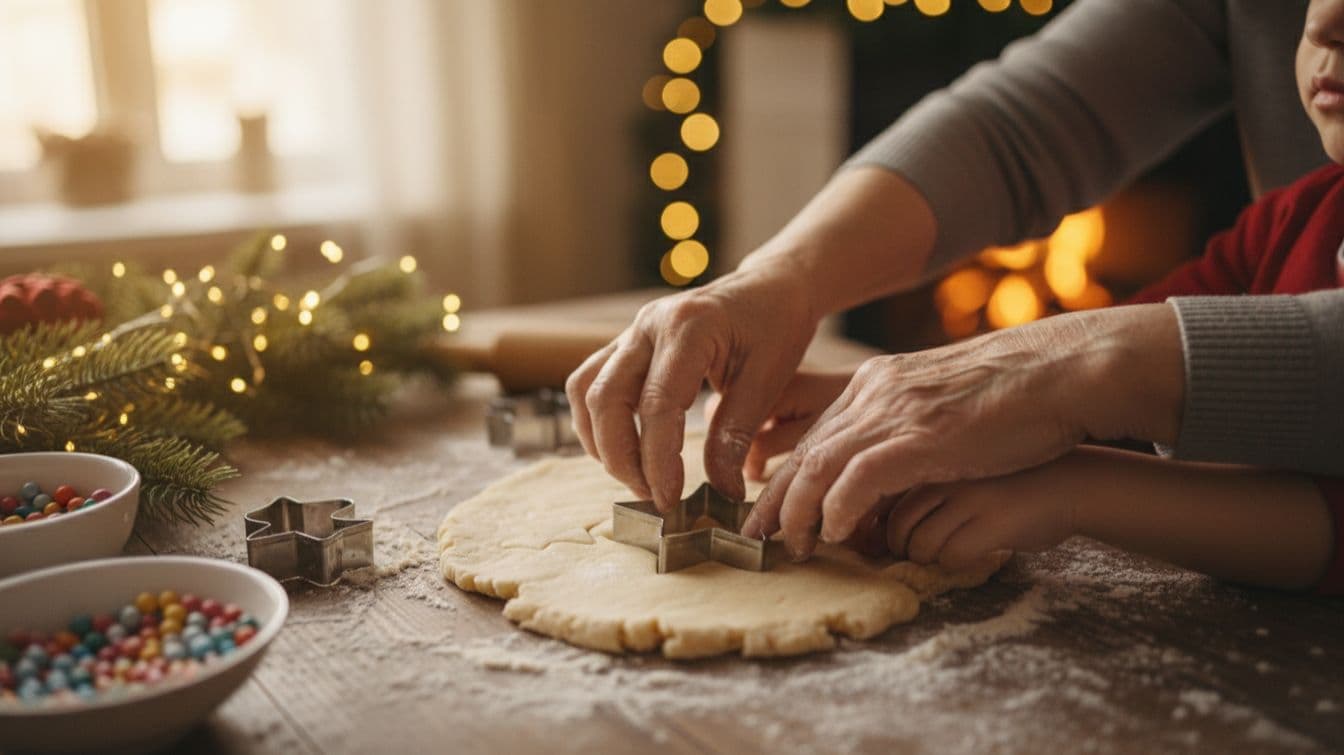
Baking can be adapted by giving your loved one one specific task: stirring the batter, pressing cookie cutters, arranging sprinkles. Pre-measure ingredients so they can "add" them to the bowl. The participation matters more than the contribution.
Decorating becomes accessible when you bring the decorations to them. Instead of asking them to move around the house, set up a small tree or wreath at table height. Hand them ornaments one at a time. Let them direct where things should go even if they can't place them independently.
Gift wrapping can be simplified to holding ribbon, choosing paper, or sticking on bows. Pre-cut paper and tape so they can participate in assembly without frustrating fine motor demands.
Card signing may mean just a first name, or even just holding the pen while you guide. The point is presence on the card, not perfect handwriting.
Activities by Ability Level
For those with mild limitations, focus on adapting the environment rather than the activity. Provide good lighting, comfortable seating, and extra time. Offer help without taking over. Let them lead what they can still manage.
For those with moderate limitations, break activities into single steps. Stay beside them providing gentle guidance. Choose activities with sensory payoff — things that smell good, feel interesting, taste delicious. Keep sessions short; fifteen minutes of engaged participation beats an hour of exhausted struggling.
For those with significant limitations, focus almost entirely on sensory experience and presence. They may not be able to "do" an activity, but they can experience it. Bring the sights, sounds, smells, and tastes of the holiday to them. Hold their hand while carols play. Let them smell the cookies baking. This is participation too.
Creating New Traditions
Sometimes the most meaningful approach is creating new traditions that work for who your loved one is now, rather than struggling to maintain traditions designed for who they used to be.
Maybe the new tradition is looking through old photo albums together while holiday music plays. Maybe it's a simple drive to see Christmas lights. Maybe it's an afternoon of hand massage with holiday-scented lotion.
These gentler activities can become treasured rituals — moments the whole family looks forward to, adapted to current reality rather than fighting against it.
Involving the Whole Family
Help younger family members understand that Grandma or Grandpa participates differently now. Frame this as natural rather than sad. Children often adapt beautifully when given simple guidance: "Grandpa's hands get tired, so you can help him put the star on top."
Assign grandchildren as activity partners. The one-on-one attention benefits both generations — seniors get engaged companionship, and children learn patience, compassion, and the value of slowing down.
Your Next Step
Don't let changed abilities steal holiday joy. With adaptation and creativity, your loved one can remain part of family celebrations in ways that matter. If you need support making this holiday season meaningful and manageable, we're here to help.
Creating meaningful holiday moments for seniors with changing abilities takes creativity and support. Geriatric Care Solutions can help your family navigate the season with joy. Call 1-888-896-8275 or email ask@gcaresolution.com.